Call (269) 262-1399 for a free in-home water test. You'll talk to the owner
Clear & Simple Water Service Logo
Commercial · Restaurants & bars · Kalamazoo & Portage

Hard water is on your P&L. We take it off.

Kalamazoo water runs about 20 grains per gallon. Hobart’s recommended maximum for a dish machine is 3.5. The gap shows up as scale in the dish machine, cloudy ice, a scaled espresso boiler and a booster heater working too hard. We install commercial softeners on the full Clack valve line, sized to your flow, and commercial reverse osmosis for ice, coffee and steam, off-hours, by the owner, and then keep them running on a service plan.
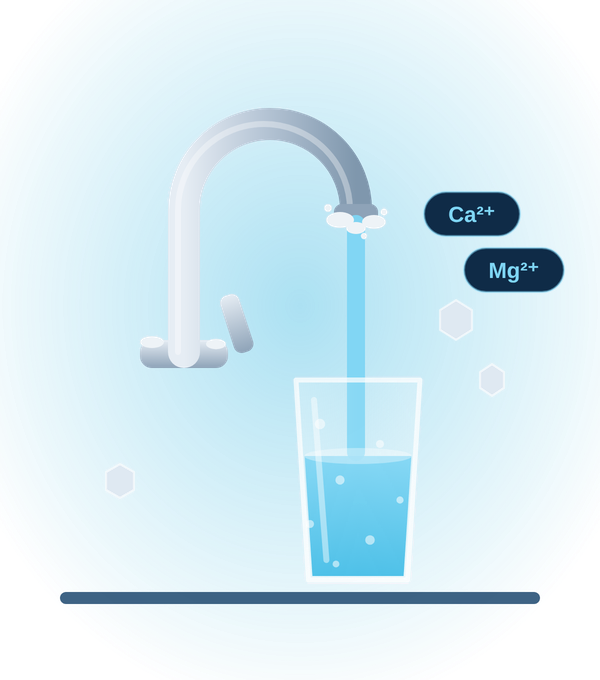
Hard water: scale on a faucet and spots on a glass
What hard water costs a kitchen

Four machines, one cause.

Every one of these is a repair bill, a chemical bill or an energy bill before it is a water bill. Sources under each card.

The dish machine

Hobart recommends 3.5 grains per gallon or less and says anything above it needs a softener. Kalamazoo water runs about 20. On untreated water the heating element, wash arms and pump scale over; you see spotted glassware, more detergent and rinse aid, more deliming, and eventually a dead element on a Friday night.

Hobart Corporation, Protecting Your Commercial Dishwasher from Hard Water

The ice machine

Scale on the evaporator slows every harvest and brings the service tech; dissolved solids make cloudy ice that melts fast. Softened feed water and the right filter at the machine keep the plates clean and the ice clear, and keep the machine inside its manufacturer’s water requirements.

Manufacturer water-quality requirements vary by model; we check yours

Coffee and espresso

Espresso boilers scale faster than anything else in the building because they sit hot all day. The industry targets are about 1 to 6 grains of hardness and 40 to 80 ppm of alkalinity; too little mineral is as bad as too much. We hit that window with RO plus controlled remineralization or a measured blend.

Industry espresso water targets, Prima Coffee water treatment guide

Water heaters, boosters, steamers

The Battelle study for the Water Quality Research Foundation measured water-heating efficiency losses of up to 24% on hard water, and nozzles clogging within 18 months. A booster heater, steamer or combi oven on untreated water is on a descaling schedule for life.

Battelle Memorial Institute for WQRF, 2009
What we install

Two systems, sized to your kitchen.

The same Clack platform we service in homes across Southwest Michigan, in the sizes a commercial kitchen needs.

WS1 to WS3
the full Clack valve line, 1 in. to 3 in.
28–250 gpm
service flow across the line
Twin
alternating tanks: soft water during regeneration
Metered
regenerates on gallons, not a timer

Commercial Water Softeners

Clack WS1, WS1.25, WS1.5, WS2 and WS3 valves • Single or twin-alternating • Sized to peak flow and daily gallons

  • Sized to flow, not to a catalog. We measure your peak gallons per minute and daily gallons and size the valve, tank and resin bed to them. Too small scales the dish machine; too big wastes money.
  • Twin-alternating for seven-day kitchens. One tank in service while the other regenerates, so there is no hard-water window in the middle of a Saturday dinner.
  • Metered regeneration. The valve counts gallons and regenerates when the resin is spent, overnight, on your schedule.
  • Brine tank sized for deliveries. We load it; your staff never touch a salt bag.
  • 2-inch and 3-inch valves for hotels, laundries and multi-unit buildings, on the same platform.
98%
of dissolved solids rejected at the membrane
Ice, coffee, steam
the equipment it feeds
Remineralized
into the espresso window
Tank + pump
sized to the lunch rush

Commercial Reverse Osmosis

For ice machines, coffee and espresso, steamers and combi ovens • Storage and booster pump sized to peak draw

  • Clear ice and clean plates. RO feed water keeps scale off the evaporator and dissolved solids out of the cube.
  • Espresso water on purpose. RO followed by controlled remineralization or a measured blend lands in the 1 to 6 grain, 40 to 80 ppm alkalinity window, and we test it.
  • Steamers and combi ovens that specify treated water get it, inside the manufacturer’s limits.
  • Protected membrane. Sediment and carbon prefilters ahead of it, changed on the plan; the membrane changes when the TDS says so, not on a guess.
How a commercial job goes

From site visit to service plan.

  1. 1Site visit, on your schedule.We test the water (hardness, iron, TDS, pH, chlorine), count the equipment it feeds, measure peak flow and daily use, and look at the mechanical room and the drain.
  2. 2A written recommendation.The system, the valve size and why, the tank, where it goes, what it fixes, and a real price. No catalog sizing and no guessing at your flow.
  3. 3Installed off-hours, by the owner.Close to open, or between services. Water is off for hours, not days. Permits where required are pulled by the licensed plumber on the job.
  4. 4Started up with your equipment running.We test the treated water at the dish machine and the ice machine, set the system to your schedule, and leave the numbers in writing.
  5. 5Then the service plan.Salt delivered and loaded, filters changed on schedule, an inspection every visit, a log on the tank, and one number to call.
The service plan

What keeps it off your list.

  • Salt, delivered and loaded on a schedule sized to your use.
  • Filters changed on schedule: RO prefilters quarterly, the membrane when the TDS says so, ice-machine and beverage filters with them.
  • An inspection every visit: hardness tested at the dish machine, the regeneration log read, brine tank, bypass and connections checked.
  • A log on the tank so your GM and your health inspector can see what was done and when.
  • Priority response for plan customers, with your system’s parts on the truck.
  • One number. The owner installed it and the owner answers: (269) 262-1399.

Priced per visit or per month after the site visit, in writing.

Also a fit for

Anyone whose equipment runs on hot water.

We already install and service commercial systems in the Kalamazoo area. Restaurants and bars first, because the water hits them hardest.

Restaurants and barsCoffee shops and breweriesHotels and motelsLaundromats and salonsDental, medical and vetChurches and schoolsApartments and condosCar washes and small manufacturing

Questions from owners and GMs

Do we have to close for the install?

No. We install between close and open, or between services, and the water is off for hours, not days. The dish machine and ice machine run on treated water by the next shift.

Our softener can’t keep up on weekends. Why?

Almost always because it was sized like a house: one tank, a household valve, and a regeneration that leaves you on hard water in the middle of service. A commercial system is sized to your peak gallons per minute and your daily gallons, and a twin-alternating system regenerates one tank while the other stays in service, so the kitchen never sees hard water.

What size valve do we need?

The one your flow needs. Clack makes valves from 1 inch to 3 inches, roughly 28 to 250 gallons a minute of service flow; a 2-inch valve on a 3/4-inch kitchen is money wasted and a 1-inch valve on a 100-seat restaurant is a scaled dish machine. We measure before we quote.

Isn’t reverse osmosis water bad for espresso?

Pure RO water is: it is flat and it corrodes boilers. Espresso equipment wants a window of about 1 to 6 grains of hardness and 40 to 80 ppm of alkalinity, which our water misses by a mile in the other direction. We hit the window with RO followed by controlled remineralization or a measured blend, and we test it.

Do you deliver salt?

Yes. Salt delivered and loaded on a schedule sized to your use, with a hardness check at the dish machine and a look at the system on every visit, as part of the service plan.

Who do we call when something is wrong at 5 PM on a Friday?

The same person who installed it. Service-plan customers get priority response, and we keep the parts for your system on the truck.

Sources
  1. Hobart Corporation, “Protecting Your Commercial Dishwasher from Hard Water” (3.5 grains per gallon or less recommended; above that, a water softener).
  2. Battelle Memorial Institute for the Water Quality Research Foundation, Softened Water Benefits Study, 2009 (water-heating efficiency losses up to 24% on hard water; showerhead nozzles clogged within 18 months).
  3. Clack Corporation valve specifications as listed in The Complete Guide to Clack Water Softener Valves (WS1 twin 28 gpm, WS1.5 70 gpm, WS2 115 gpm, WS3 250 gpm service flow).
  4. Espresso water targets: Prima Coffee, Coffee Water Treatment (1 to 6 gpg hardness, 40 to 80 ppm alkalinity, 70 to 200 ppm TDS).
  5. WMUK, “Why Kalamazoo’s water comes with minerals,” Jan. 14, 2016, quoting the City of Kalamazoo Public Services Department (about 20 grains per gallon).

Start with a site visit

We test the water, count the equipment, measure the flow and put a recommendation and a price in writing. No charge for the visit.

Kalamazoo, Portage and Southwest Michigan. Evenings and overnights for installs.
Schedule a Visit